Quick answer: We found no published trial showing weight loss with sermorelin or with the growth-hormone-releasing-hormone (GHRH) peptides studied in adults. Two small 1997 studies of GHRH-(1-29) analogs reported no change in body weight, and one reported more lean mass in men only. Compounded sermorelin is not FDA-approved, and its past approval, withdrawn in 2009, was for children with growth hormone deficiency, not for weight.
Searching "sermorelin for weight loss" returns confident clinic pages and a much thinner scientific record. This page sets them side by side. Some links on this site are affiliate links, which means we may earn a commission, and the one near the end of this page is labeled before you reach it.
Background on the peptide is on the sermorelin profile; here the question is narrower: what did anyone measure about weight?
Short version of the record
| Question | What the sources say | Source type |
|---|---|---|
| Did a GHRH-(1-29) analog change body weight in older adults? | Body weight was reported as unaffected over 16 weeks of analog use (10 women, 9 men) | Khorram 1997 abstract |
| Did a GHRH-(1-29) peptide change weight, fat or muscle in older men? | No change in weight, body mass index, waist-to-hip ratio, or DEXA measures of muscle and fat over 6 weeks (11 men) | Vittone 1997 abstract |
| Is there a trial showing weight loss with sermorelin? | None found in the search behind this page | Our PubMed review |
| Is sermorelin FDA-approved today? | No. The brand Geref was discontinued; FDA withdrew approval effective 2009-06-18 | Federal Register notice |
| Does the one approved GHRH-analog drug carry a weight-loss label? | No. Its label says it is not indicated for weight loss management | Tesamorelin label |
As of 2026-10-06. The "none found" row describes our search of PubMed abstracts and a title scan of 24 sermorelin hits, not an exhaustive systematic review.
What "weight loss" would need to mean
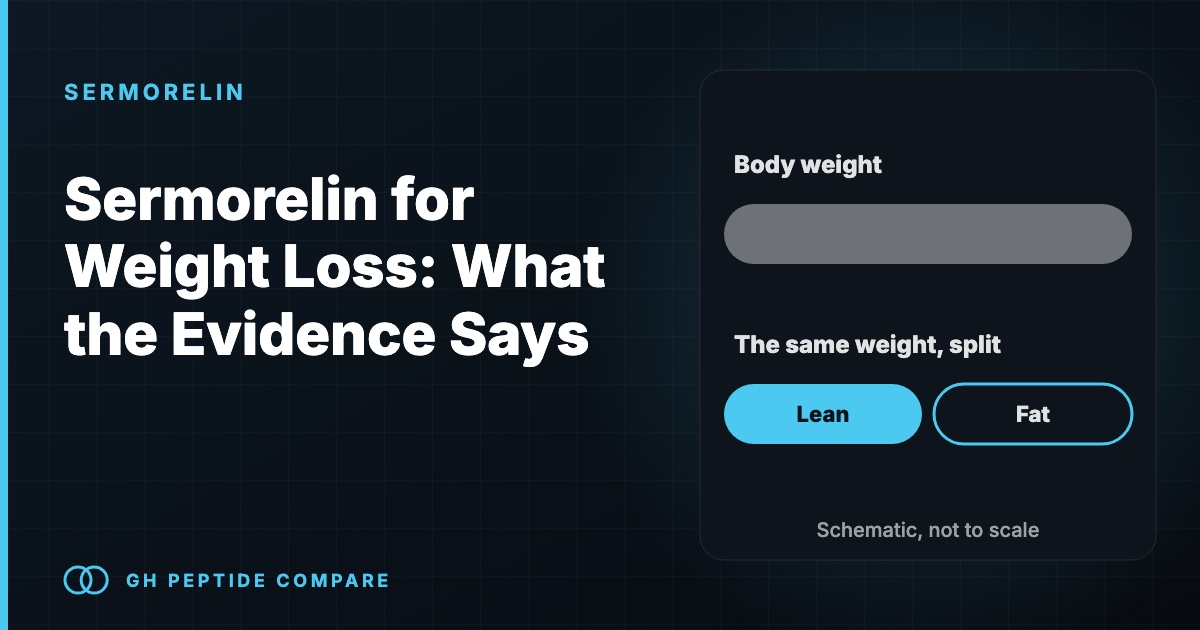
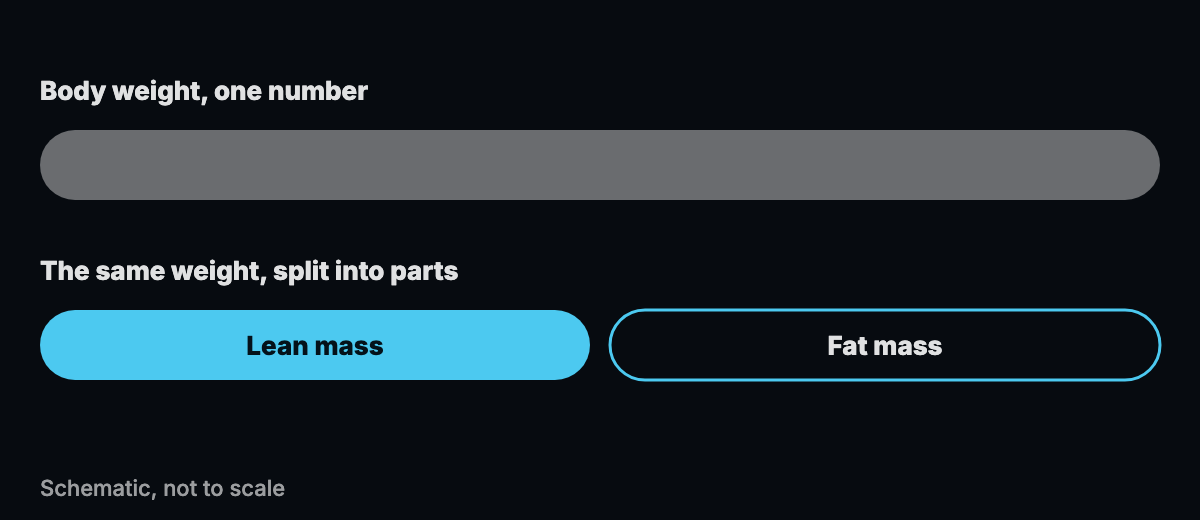
Scale weight is one number. It moves with water, muscle, fat and bone, so weight can stay put while the makeup of the body shifts, or the reverse. That is why studies of growth-hormone-axis products report body composition next to weight.
A weight-loss claim, read strictly, needs a trial that tracked weight against a comparison group for long enough to matter. We looked for one for sermorelin and did not find it. What exists is a handful of small studies in older adults built around hormone levels.
What the GHRH-analog studies measured
Both adult studies below are worded as their abstracts word them. Neither abstract calls the study drug sermorelin by name, so we describe them as studies of GHRH-(1-29) peptides, the same 29-amino-acid fragment family that sermorelin belongs to. Whether the study material is the same compound as a pharmacy-compounded product was not confirmed from the full texts.
Khorram and colleagues, 1997
This single-blind, randomized, placebo-controlled study ran five months. Ten women and nine men aged 55 to 71 injected saline for four weeks and then a GHRH-(1-29) analog, [Nle27]GHRH-(1-29)-NH2, for sixteen weeks. Overnight growth hormone rose in both sexes, as did IGF-I and IGFBP-3.
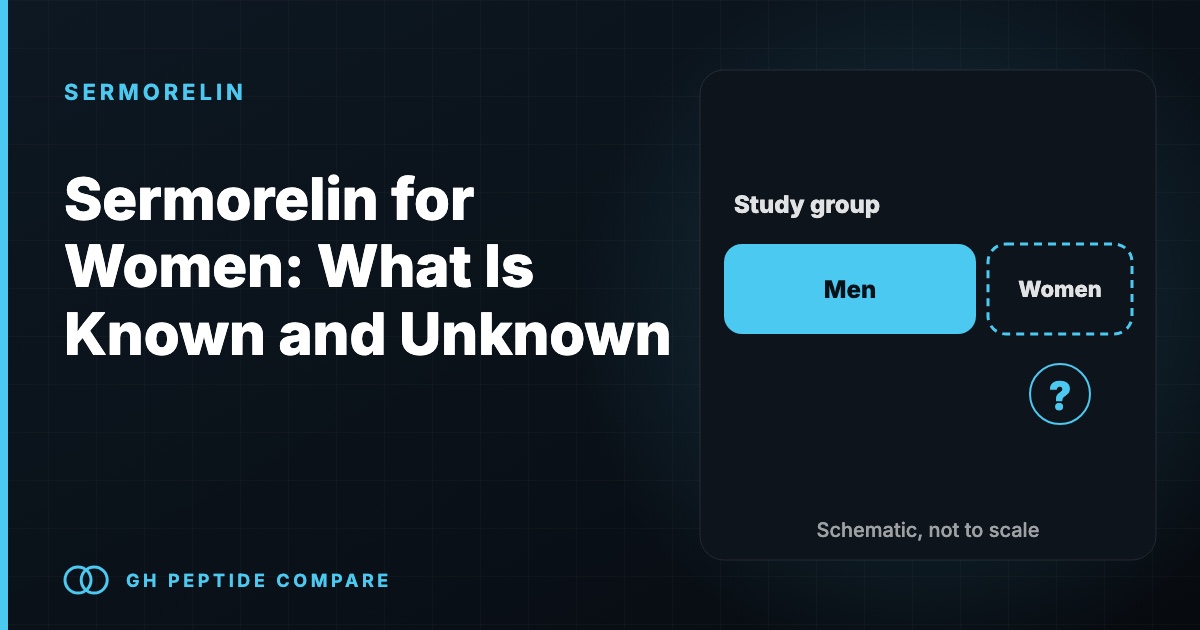
On the outcomes this page cares about, the abstract states: Although blood pressure and body weight were unaffected, GHRH analog treatment resulted in a significant increase in skin thickness (P < 0.05) in both genders and increased lean body mass in men only (P < 0.05), with no other changes in body composition or bone mineral density in either gender. Fat mass is not singled out as changed. That is a weight result of "unaffected," a lean-mass increase for the men, and nothing for the women.
Vittone and colleagues, 1997
Vittone and colleagues studied eleven healthy, non-obese men aged 64 to 76 with low baseline IGF-I levels, giving GHRH-(1-29) nightly under the skin for six weeks. The abstract does not describe a placebo arm. Nighttime growth hormone release went up, but IGF-I, IGFBP-3 and GH-binding protein did not change.
On body measures the abstract is direct: GHRH "did not change weight, body mass index, waist to hip ratio, DEXA measures of muscle and fat, muscle histology, glucose, insulin, or GH responses to OGTT, or lipids." Two of six strength measures and one abdominal endurance measure improved. The authors noted that single nightly doses may be less effective than multiple daily doses; no study we found tested that for weight.
What these two studies cannot tell you
Their limits matter as much as their results:
- Both enrolled older adults, 55 to 76 years old. People with obesity or people trying to lose weight were not studied.
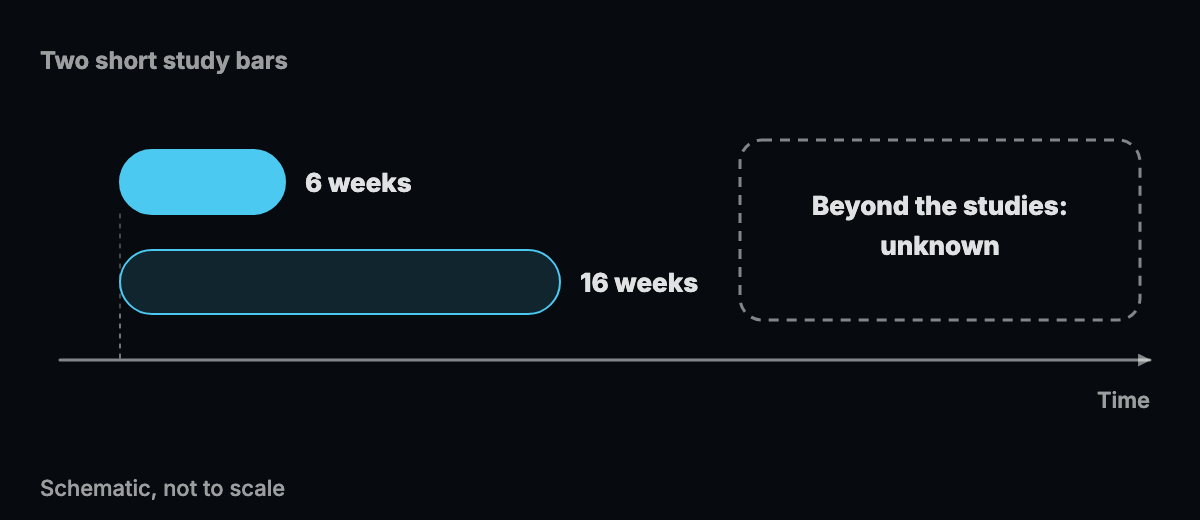
- They lasted six and sixteen weeks, so long-term effects on weight are unknown.
- Neither made weight its primary goal, and a rising hormone level is a surrogate result.
For the women's side of this data, see sermorelin for women.
Body composition is not weight loss
This section is the center of the page, because the confusion between the two ideas is how a thin record becomes a confident headline.
Weight is what a scale reads. Body composition is the split of that weight between lean mass (muscle, organs, water, bone) and fat. A product could, in principle, leave the scale unchanged while moving a few pounds between those categories. That is the pattern the Khorram abstract describes for the men: weight unaffected, lean mass up. It is not a pattern of weight loss, and it did not appear in the women.
A larger body of evidence sits underneath this. The Endocrine Society's 2011 clinical practice guideline on adults with diagnosed growth hormone deficiency says, about recombinant growth hormone in that diagnosed population, that GH therapy "offers benefits in body composition, exercise capacity, skeletal integrity, and quality of life measures and is most likely to benefit those patients who have more severe GHD." Two details limit how far it travels: it concerns recombinant growth hormone, not a releasing peptide, and it applies to adults whose deficiency was confirmed, which the guideline says usually requires stimulation testing.
The FDA briefing prepared for its Pharmacy Compounding Advisory Committee in December 2024 draws the same kind of line from the regulatory side. It says: Among GHSs such as CJC-1295, only sermorelin (Geref, NDA 020443) was approved for the treatment of short stature associated with GHD in pediatric patients. There are no GHSs that have been approved for the treatment of either adult- or childhood-onset GHD in adults. Within the material we collected, the briefing speaks to approvals for deficiency; the statement about body composition in diagnosed deficiency comes from the Endocrine Society guideline above, not from the briefing, and we do not attribute it to FDA.
Our reading: evidence about a hormone in people who lack it does not automatically carry over to healthy adults or to a different molecule. A review of growth hormone in healthy older adults found changes in body composition that the reviewers called small, with more side effects, and concluded GH could not be recommended as an anti-aging therapy. That review concerned growth hormone, not sermorelin. It is cited on the sermorelin vs HGH page, where the distinction between the hormone and a releaser is covered.
The drugs that do carry weight-management labels
To keep categories straight, here is how sermorelin differs from the products that FDA has labeled for weight management. These are named only to separate them; we give no trial results for them here.
- Brand-name injectable drugs such as Wegovy and Zepbound have their own FDA-approved labels for chronic weight management. Sermorelin has no such label, and neither does any compounded sermorelin product.
- Sermorelin acts on the pituitary's release of growth hormone. The labeled weight-management drugs belong to a different class, so a result for one says nothing about the other. Offering sermorelin as an equivalent is a claim this page's evidence does not support.
What FDA has said that bears on weight
Three FDA statements are relevant, and none says sermorelin helps with weight.
The tesamorelin label, as a contrast. Tesamorelin is the one approved GHRH analog. Its current label (EGRIFTA WR, published 2026-08-03 on DailyMed) says it is indicated for the reduction of excess abdominal fat in HIV-infected adult patients with lipodystrophy. The same label states: EGRIFTA WR is not indicated for weight loss management as it has a weight neutral effect. If the approved member of this family is labeled as not for weight loss management, a weight claim for a compounded relative needs strong evidence, and we found none. Detail is on the tesamorelin profile.
Sermorelin's own history. The brand Geref was approved for children with growth failure from idiopathic growth hormone deficiency and, separately, as a diagnostic. The maker told FDA it was discontinuing both in 2008, and FDA withdrew the approvals effective 2009-06-18. A 2013 Federal Register determination records that neither product left the market over safety or effectiveness. It concerns generic-application eligibility, and it is no endorsement of any current product. The FDA status article lays out the timeline.
Compounding lists. On FDA's outsourcing-facility (503B) list dated 2025-03-21, sermorelin acetate sits in Category 1 with an asterisk for approved-drug components; the pharmacy (503A) lists dated 2026-05-14 omit it. A category is a list position, not an approval.
How weight claims tend to be built
When a page promises weight results from sermorelin, the argument usually has three steps. First, "sermorelin raises growth hormone," which the studies above show as a hormone-level result in older adults. Second, "growth hormone changes body composition," which the Endocrine Society guideline supports for recombinant GH in diagnosed deficiency and which a review found small in healthy older adults. Third, "so sermorelin helps you lose weight," the step with no trial behind it; in the two studies we read, weight did not change.
Marketing words can stand in for data. The USADA page on sermorelin says users report improved energy, sleep, lean body mass and vitality, then adds that robust clinical evidence for anti-aging effects is lacking and remains controversial. User reports are a different kind of evidence from randomized studies; our before-and-after article explains how to read them.
What the sources support
- On the goal of a lower scale reading, the evidence for sermorelin is absent, not mixed.
- On lean mass, one small placebo-controlled study found an increase in men only, aged 55 to 71, using an analog.
- If a clinic cites "clinical studies," ask which ones, in whom, over how long, and what was measured. The questions checklist turns that into a one-page list.
Where Whoosh Wellness fits
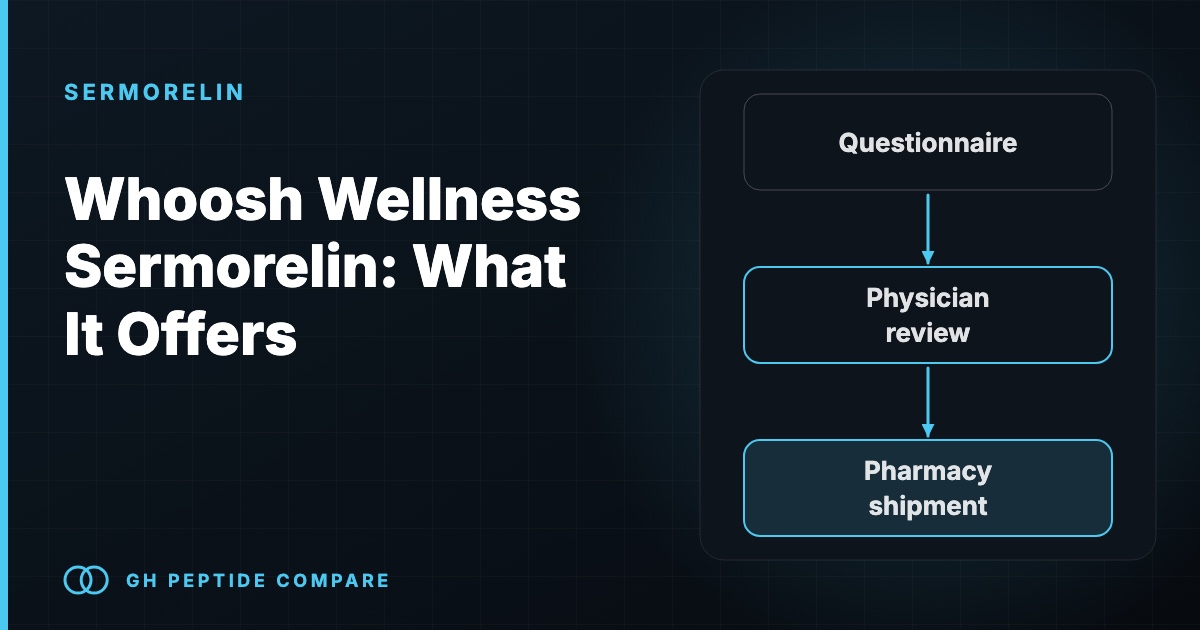
Whoosh Wellness is the one provider this site is an affiliate partner of. As stated by Whoosh, read 2026-10-06, it offers compounded sermorelin as injections and tablets after an online questionnaire reviewed by a licensed physician, with the product prepared by licensed pharmacies. Whoosh's own product pages describe sermorelin with body-composition wording; this page does not repeat those descriptions as established facts, because the studies we found did not show weight loss. Compounded medications are not FDA-approved, which Whoosh's terms also say. Whoosh does not offer ipamorelin, CJC-1295, tesamorelin or MK-677. Our Whoosh review covers the service, and the cost article covers pricing in general terms.
This link is an affiliate link, and we may earn a commission if you use it, at no extra cost to you. Using it starts an intake with Whoosh, not a purchase.
A licensed physician decides whether a prescription is appropriate, and Whoosh states that completing an intake does not guarantee a prescription. Nothing on this page predicts what any product will do for your weight.
Sources
- PubMed: Khorram et al., J Clin Endocrinol Metab 1997, GHRH analog in older adults read 2026-10-06
- PubMed: Vittone et al., Metabolism 1997, GHRH-(1-29) in older men read 2026-10-06
- PubMed: Molitch et al., Endocrine Society adult GH deficiency guideline, 2011 read 2026-10-06
- FDA: Pharmacy Compounding Advisory Committee briefing on CJC-1295, December 4, 2024 read 2026-10-06
- DailyMed: EGRIFTA WR label read 2026-10-06
- Federal Register: Determination that Geref was not withdrawn for reasons of safety or effectiveness, 2013-03-04 read 2026-10-06
- FDA: 503B bulk drug substances categories, updated March 21, 2025 read 2026-10-06
- FDA: 503A bulk drug substances categories, updated May 14, 2026 read 2026-10-06
- USADA: What should athletes know about sermorelin read 2026-10-06
- PubMed: Liu et al., Ann Intern Med 2007, growth hormone in the healthy elderly read 2026-10-06
- Whoosh Wellness: how it works read 2026-10-06
FAQ
Does sermorelin cause weight loss?
We found no published trial that shows it. Two small studies of GHRH-(1-29) peptides in older adults reported body weight unchanged. Anyone promising weight loss from sermorelin is going beyond the studies we located.
Is sermorelin approved for weight management?
No. The brand Geref was approved for children with growth hormone deficiency and as a diagnostic before FDA withdrew approval effective 2009-06-18. Compounded sermorelin is not FDA-approved for any use.
Is sermorelin allowed in sport?
WADA's 2026 Prohibited List names sermorelin, and USADA calls it prohibited.
Is lean mass the same as weight loss?
No. Lean mass is one component of body weight. A study can report more lean mass while weight stays unchanged, as one 1997 abstract did for men.
How is sermorelin different from tesamorelin?
Tesamorelin is an approved GHRH analog with a narrow label for excess abdominal fat in HIV-infected adults with lipodystrophy, and the label says it is not indicated for weight loss management. The two are compared in more detail on the sermorelin vs tesamorelin page.
What does the Whoosh intake involve?
As stated by Whoosh, read 2026-10-06, it starts with a questionnaire that a licensed physician reviews. A licensed physician decides whether a prescription is appropriate, and nothing is promised in advance.
Not medical advice. See the medical disclaimer.